Kindness against los golpes en la vida

"Be kind, for everyone you meet is fighting a hard battle."

This quote is often attributed to Plato, but some argue it was someone else. It doesn't much matter; the sentiment is there.

I have several friends who seem to be struggling right now. OK, I'll count myself among them, too, if I'm going to be honest.


We all pass through these times when no matter how bright the sun shines, we feel like we can't get out of the shadows. 


At times like this I think of the Peruvian poet César Vallejo. In his tragic poem, "Espergesia," he laments: "
Yo nací un díaque Dios estuvo enfermo, grave."

How must it have felt to write that he felt that God was gravely ill the day he was born? I think of his poem, "Los heraldos negros" ("The Black Messengers") and how he cries out about the blows that life delivers us.

Hay golpes en la vida, tan fuertes... ¡Yo no sé!
Golpes como del odio de Dios; como si ante ellos,
la resaca de todo lo sufrido
se empozara en el alma. ¡Yo no sé!


Son pocos; pero son. Abren zanjas oscuras
en el rostro más fiero y en el lomo más fuerte.
Serán tal vez los potros de bárbaros atilas;
o los heraldos negros que nos manda la Muerte.


Son las caídas hondas de los Cristos del alma,
de alguna fe adorable que el Destino blasfema.
Estos golpes sangrientos son las crepitaciones
de algún pan que en la puerta del horno se nos quema.


Y el hombre. Pobre. ¡Pobre! Vuelve los ojos, como
cuando por sobre el hombro nos llama una palmada;
vuelve los ojos locos, y todo lo vivido
se empoza, como charco de culpa, en la mirada.


Hay golpes en la vida, tan fuertes. ¡Yo no sé!


I don't know why poetry, and especially Spanish poetry, speaks to me at times like this. I hope soon I will feel inspired to turn to Neruda's love poems instead of Vallejo's lamentations. But at least for now I know that someone else felt the same way I do. That I'm not alone.


And it reminds me to follow Plato’s admonition to be kind to everyone. We’re all bracing ourselves against the blows of life.


Note: I wrote this post on January 23, 2013. I don't remember exactly what caused me to write it, but I do remember vividly the emotions I was feeling. Any time I pull out César Vallejo poetry, it's certainly not a happy day. I find writing therapeutic and I wrote this as a way to help me deal with whatever it was that I was struggling with. For whatever reason I didn't hit the "Publish" button. I did copy it and share it with a few close friends, but otherwise it's been sitting here as a draft. I ran across a copy I printed out the other day and thought about it a bit after re-reading it, and then today I was reminded again about it. So, here it is.

Back in the U.S.S.R.: 25 years ago this week...

Twenty-five years ago this week I returned from the most remarkable trip I had taken in my young life. I had just spent nearly a month in the Union of Soviet Socialist Republics. Yes, the USSR. I was a high school kid from Kaysville, Utah and I had just been to Leningrad, Odessa, Kiev, Sochi, and Moscow (and Helsinki on the way in and Frankfurt on the way out). It was quite a first international trip for a guy who had yet to leave the country (nope, not even Mexico or Canada). 

I already loved to travel and had been around western United States and had been to East Coast a couple of times. In fact, as I was traveling to the USSR my family was prepping for our move to New Hampshire. But this trip solidified the diagnosis that I had a permanent case of the Travel Bug. I immediately wanted to travel again. Although I was in high school I was able to earn college credits through the University of Utah and as such it was my first study abroad experience in addition to being an exchange program. (We had students from the USSR visit us in Utah, including at Davis High School.) 

While in college I studied abroad for a term in Mexico. And then as a professor I've taken students on three study abroad programs: to Taiwan (2009), the Dominican Republic (2010), and Cuba (2012).  In fact, it was the trip to the USSR that inspired me to make the Cuba trip a reality. I'm currently finishing my plans for the 2014 course. In addition to leading these study abroad experiences I've also been abroad for my own research or to conferences as a professor (my own "study abroad" programs, so to speak): to Canada, Taiwan, Chile, and Peru. There's practically no place I don't want to visit.  

What is it about travel that appeals to me so? In a word, curiosity. I'm curious. About language, culture, politics, history, education, economics, well, about everything (or just about everything) and there is really no substitute for "being there." And the best part of "being there" is meeting the people, not just seeing the sights. 

Mark Twain summed up why that experience of "being there" is so important: 
Travel is fatal to prejudice, bigotry, and narrow-mindedness, and many of our people need it sorely on these accounts. Broad, wholesome, charitable views of men and things cannot be acquired by vegetating in one little corner of the earth all one's lifetime.

So, as I reminisce 25 years later, here are a few snapshots of me in the USSR doing what I most love about going new places -- making new friends.

Singing Beatles songs with Russian rockers at our hotel after seeing their concert in Leningrad. One of us had just given the lead singer the "Moscow Summit" t-shirt.
After a friendly game of basketball at a Soviet Pioneer Camp.
Maybe borrowing a Red Army soldier's hat wasn't the wisest move I've made in my life. At least Doug seems to approve. In other news, Doug and I may have been "detained" by police in Leningrad for suspicion that we had allegedly, or were about to, trade on the Black Market with two friends we had met, Ilia and Dmitri. But that might be a story for another time.
A page from my photo album. Like my great cartography and Cyrillic skills showing where "Utah" is? And, no, Victoria and I didn't stay in touch.
In front of Lenin's Tomb right after meeting its embalmed occupant.
And just the year before I visited the Soviet Union another, slightly more famous American, visited the USSR.


Prejudice against Sweden's indigenous people

          The heading of the article is "Parasite from reindeer is spreading -to humans"

Swedish Aftonbladet and Dagens Nyheter has an article about a fly that lays eggs on reindeer, and that sometimes comes in contact with humans with occasional human hosts as a result. The fly is reported to populate the most northern part of Norway close to Hammerfest.

The "news" is really old news and the fly and its parasite is well known, which is not very surprising since reindeer herding has been a major way of life for the indigenous Sami population of the northern part of Scandinavia for thousands of years.

The real news of the article is instead that it is an example of the systematic prejudice against the indigenous people of Sweden, the Sami. This is classic prejudicial propaganda, alleging that a specific ethnic group is responsible for diseases, plagues, parasites and similar unwanted consequences.

The Sami population is a thorn in the side of the "wolf  huggers" of Sweden since obviously the rights of the indigenous Sami population and the reindeer herding is in the way of an inhibited spreading of wolves. The other week some wolves killed a whole bunch of sheep, left them dead, in an obvious sport killing frenzy, which the russian wolf stock is known to engage in. Not surprisingly shortly after this, media in Sweden is reporting about this obscure fly far above the polar circle in Norway, where not even trees grow, spreading prejudicial notions about the reindeer herding and the Sami way of life.

It probably won't be long before som "do good" environmentalist demands to have costly and cumbersome veterinary routines, which for all practical purposes is no more that state legitimized sanctions against the reindeer herding and the Sami population's traditional way of life.

Royal Wedding


HRH Princess Madeleine of Sweden and Mr. Christopher O'Neil are getting married June 8, 2013. HRH Princess Madeleine is fourth in line to the Swedish throne.

Congratulations to the happy couple!

Aftonbladet
The Royal Court
Daily Mail
Ilta-Sanomat

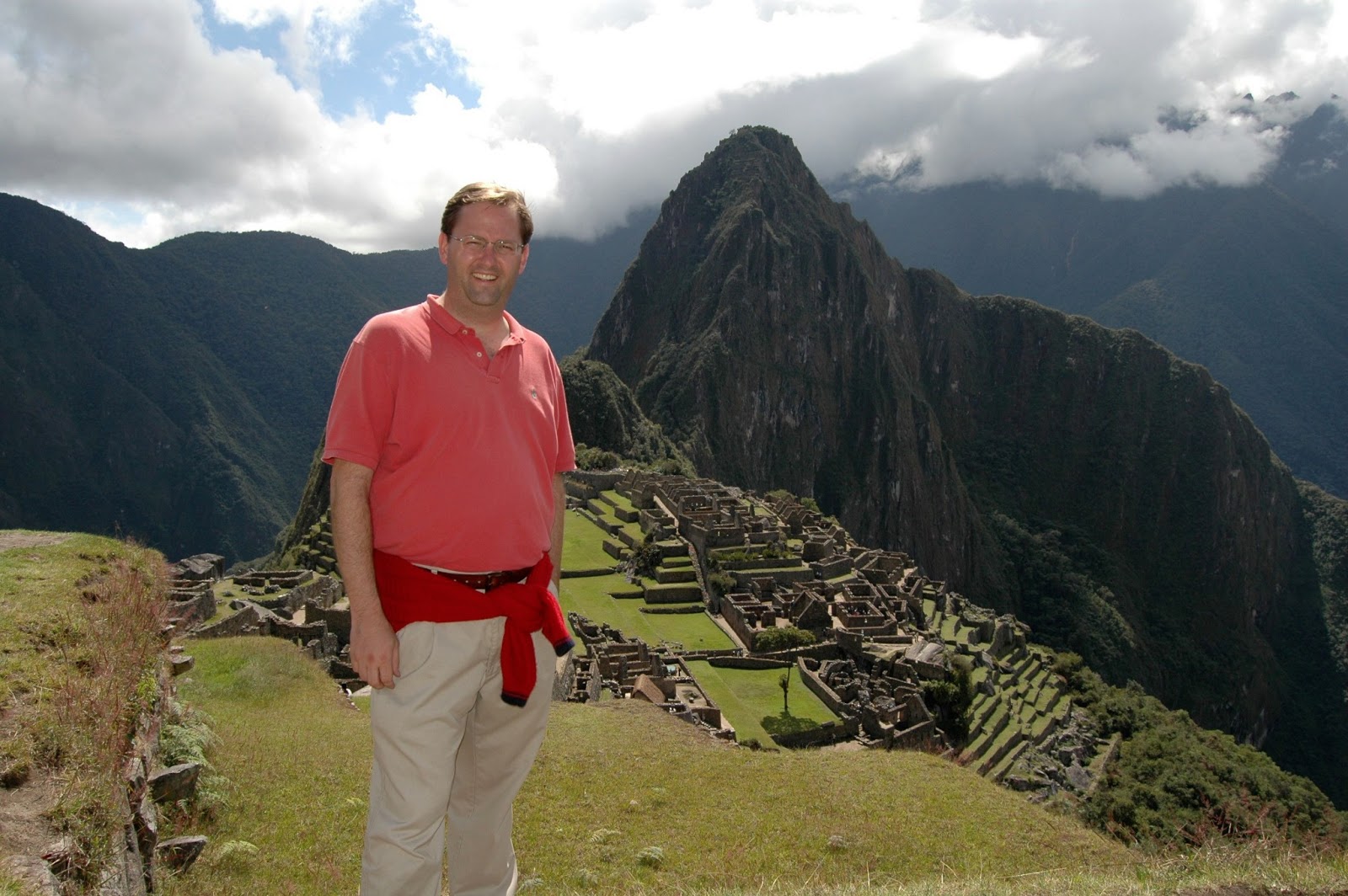
Hacia las alturas de Machu Picchu

Esta mañana me amanecí temprano y fui de caminata por las calles de Columbia. Hace cinco años hoy, el 31º de mayo de 2008, me desperté aún más temprano y fui caminando por las calles de un lugar un poco más exótico, el pueblo de Aguas Calientes en el Perú, para poder subir al autobús para ascender a las alturas de Machu Picchu.

Al llegar a la entrada de la antigua ciudad Inca todavía no se había amanecido el sol. El cielo quedaba oscuro y el aire estaba lleno de nieblas. Dirigí la mirada hacia las famosas ruinas pero no se podía ver nada. Todo estaba escondido detrás de las nubladas sombras.

Entonces busqué el pasaje para la Puerta del Sol, el fin del Camino Inca. Por las tinieblas me fui en esa senda hacia el sol.

Esa puerta da una vista rara y extraña. Con el sol subiendo por el este, se parten las nieblas y en el lado oriental de la puerta las rocas resplandecen del sol. Pero al lado occidental de la puerta las piedras quedan frías y oscuras. Era como que de la puerta había creado una línea invisible pero verdadera entre la luz y la oscuridad, entre el día y la noche.

Poco a poco, mientras el sol subía y subía, esa línea se arrastraba por el sendero Inca hasta que el lado oeste también se bañaba con rayos del sol. Me di la vuelta y empecé por el sendero hacia el destino de Machu Picchu. Me había acostumbrado al ardor del sol, pero al doblarme hacia el oeste me di cuenta de repente que el sendero estaba todavía en tinieblas. Con el sol a mi espalda comencé el camino hacia las vistas que yo había venido a experimentar. A cada paso que tomé me seguía el sol y relumbraba mi ruta.

Se apartaban las nubes poco a poco y al llegar a las ancianas ruinas, ellas todavía se escondían, encubiertas por un velo nuboso. Venía el sol y se partían los celajes. Gradualmente se me revelaba Machu Picchu. Lentamente lo llegaba a conocer. Con cada rayo del sol se iluminaban los misterios de Machu Picchu.

Pasé todo el día explorando cada rincón de Machu Picchu, hasta que mis pies me ladraron. Iba conociéndolo y al fin del día me pregunté, ¿lo conozco? No. Esto es la jornada: explorar y conocer, poco a poco, lo mágico. Lo hacemos con la ayuda del sol y con los pasos que tomamos de la oscuridad hacia la luz.