Showing posts with label skin. Show all posts

Topical vs. Oral Antioxidants for Sun Protection – Which Is Better?

Eating the right foods can protect your skin from the sun.
Eating the right foods can protect your skin from the sun. (Photo by Extra Medium)

While studies on antioxidants are generally pretty disappointing when it comes to life extension, they do have some use as anti-aging treatments for the skin.

While all or most antioxidants appear to protect from the harmful effects of the sun, some antioxidants are more effective than others. Carotenoids are a case in point. One example is lycopene, which is found in tomatoes. For example, one study showed that people who ate tomato paste daily had 33% more protection against sunburn compared to the control group.

Among carotenoids, lutein seems to give the best bang for the buck. In addition to photo-protection, lutein increases skin hydration and lipid levels while reducing lipid peroxidation.

But is it better to use antioxidants topically or orally? Some folks swear by their skin creams, while others maintain that eating the right foods is the best way to improve the skin. In the lutein study, the combination of taking a lutein supplement and using a lutein cream gave the best results. Not all that surprising – by using topical and oral treatments you're covering both grounds and playing it safe, after all.

However, a recent paper got me thinking whether "attacking the problem from all angles" is really the best way to go at it. The study looked at carotenoid levels in the skin after using carotenoids topically and systemically (link). 129 healthy women, aged between 21 and 72 years, were divided into seven different groups and given topical creams, oral supplements, both, or a placebo.

The first cream contained a basic mixture of antioxidants from sources such as vitamin E, vitamin C and green tea. The second cream contained the same antioxidant mix complemented by beta-carotene and lycopene. Similarly, the first supplement contained antioxidants from sources like green tea, green coffee, and pongamia pinnata seeds, while the second also contained carotenoids.

The placebo treatments did not increase carotenoid concentration in the skin, while the carotenoid cream increased it by 30% in the forehead and 35% in the cheek. That's not bad – until you look at the results in those subjects who used the tablets instead. Taking the antioxidant supplement containing carotenoids resulted in an 80% increase in the forehead and 70% in the cheek after just four weeks.

The interesting part is the group who used both the cream and the supplements. After four weeks, the results were similar to the group using only the supplement, with the supplement-only group actually scoring better in some areas. After eight weeks the group using both treatments saw the best results.

However, whereas the effect from using the cream lasted for only 10 days after stopping treatment, the results from taking the supplement were sustained for up to 5 weeks. The authors also point out that "surprisingly, the combined application of both tablets and creams containing carotenoids did not reach the satisfying result obtained with the application of tablets only".

The result is indeed unexpected, since using the antioxidant + carotenoid cream along with the antioxidant + carotenoid supplement did in fact yield the largest carotenoid concentration. However, using the antioxidant + no carotenoids cream together with the antioxidant + carotenoid supplement gave worse results than skipping the cream altogether. That is, using the cream somehow negated some of the benefits of the supplement.

According to the authors, it's possible that systemically applied antioxidants are absorbed and transported onto the skin surface with sweat and sebum and that applying a cream won't increase the concentration any further. This is because the strateum corneum, the outermost layer of the epidermis, acts as a reservoir for topically applied substances.

Hence, when you apply a skin cream, it penetrates into this layer and saturates the reservoir, which makes it impossible for systemically absorbed antioxidants to penetrate into the same layer through sweat and sebum. The authors state that compared to taking only an oral supplement, taking a supplement and applying a cream results in a lower carotenoid concentration.

To avoid this problem, the authors suggest that the formulation of the topical cream should be such that it does not saturate the reservoir and prevent the oral antioxidants from being transported into the skin. In effect, they advise against using lipid-rich formulations.

Many people seem to have seen good results in photo-protection from using oral supplements only. While combining it with topical creams may potentially give the optimal result, this study suggests that finding the right kind of product is important.

For more information on skin care, see these posts:

Tretinoin Results After a Year – Experiment Update
BioSil, JarroSil & Beer – Silicon Experiment Conclusion
Topical Vitamin C for Skin: Re-examining the Case
How to Get Natural Sun Protection by Eating the Right Foods

Nootropics, Longevity and More: The Year 2010 in Review

Comments or suggestions for the year 2011? Drop a comment!
Comments or suggestions for the year 2011? Drop a comment! (Photo by Altus)

Happy New Year everyone! I hope your holidays went well and you're ready to make 2011 even better than last year. But before we do that, let's take a look at some of the best bits and pieces from 2010.

In January, I finally got a chance to see Aubrey de Grey for the first time. His presentation in Helsinki, Finland was mostly familiar to me already, but I enjoyed it nonetheless. Perhaps the most interesting part was when the audience got to ask questions; I thought Aubrey's answers were good, especially given that some of the comments were pretty frustrating (apparently some people think going through their entire family history somehow qualifies as a question). If you want to check out the presentation, the video is still available online through the link above. And in case you want to know more about Aubrey himself, he was also interviewed in Wired.com a while ago.

Nootropics are gaining more and more attention these days. Even 60 minutes ran a segment on students boosting brain power to do better in their studies. Amphetamine derivatives are still the most popular choice – but whoever comes up with an "organic herbal formula" that actually works as well as Adderrall is going to be rich. I also did an experiment with Ashwagandha to see whether it had a nootropic effect. It didn't, at least not the brand I was using.

And then there was the experiment with BioSil, the stuff that is supposed to make your hair and nails stronger. The science seems solid, but as I wrote in my conclusion, the price of the liquid supplement doesn't seem worth it, since orthosilicic acid, the active ingredient, is also present in my favourite beverage.

Speaking of hair, a lot of people have asked for an update on the soy isoflavones + capsaicin experiment, another one of my attempts at finding a magical hair growth formula that will make me filthy rich. The experiment has been going on for six months now, which is longer than the five months that the original study lasted, so perhaps a proper update is indeed due. So far I haven't seen much visible changes, however. I'm now adding various kinds of chili powders and pastes to almost all my foods, but I'm thinking of ordering capsaicin supplements to be sure I'm getting enough to match the study. And I also need another bottle of soy isoflavones.

I've tried a lot of useless supplements and topicals, but last year I came across something that really, actually works: retinoids. I've now been using them for over a year and I can really see the difference. My advice to anyone looking for real results is to forget about all the overpriced skin creams that are really nothing but moisturizers and go for tretinoin instead. Of course, since it actually works it's prescription stuff, so you can't just buy it from the store, you'll have to order it online and hope your package doesn't get confiscated by the customs officers who surely know better what you need than you do. Thank god for regulations!

Probably the longest and most throrough post of last year was about human hibernation and how it might relate to longevity. In addition to a look at the current state of hibernation science, there's also the odd legend of lotska, the art of hibernation allegedly practiced by poor Russian peasants:

At the first fall of snow the whole family gathers round the stove, lies down, ceases to wrestle with the problems of human existence, and quietly goes to sleep. Once a day every one wakes up to eat a piece of hard bread, of which an amount sufficient to last six months has providently been baked in the previous autumn. When the bread has been washed down with a draught of water, everyone goes to sleep again. The members of the family take it in turn to watch and keep the fire alight.

And of course, no post on slowing down metabolism would be complete without Indian fakirs and frozen mountain climbers. Check it out if you have the time, it's fascinating stuff.

While the Russian peasants may have spent most of their winter sleeping to avoid starving, there are also those who can eat as much as they like and still avoid getting fat. Even without any exercise. I'll let other bloggers fight it out over the details of the energy equation and whether a calorie truly is a calorie, but take a look at the BBC documentary in the link to see what I mean. Also check out the comment section, some interesting anecdotes in there.

How is the life extension movement doing these days? Well, the same old (and false) arguments against longer lifespans are still there, but the overall mood is pretty optimistic. Personally, I've noticed that younger people tend to be more open to the possibility of life extension than middle-aged people. Go figure. Meanwhile, the Russians have apparently found the cure for aging, although I haven't heard anything new on SkQ1 since September. But that's okay, because the next fountain of youth is already here.

Long-time readers of this blog probably remember that I did intermittent fasting for over a year. Part of the reason was that I wanted to see if 24-hour fasts could be done – I wanted to be the master of my hunger, so to speak. However, the most important reason were the studies showing positive effects from intermittent fasting without restricting total calories. You know, the whole "cleaning cells from junk through autophagy" thing.

But alas, after going through the studies more carefully, I was disappointed to find out that whenever intermittent fasting increased lifespan in mice, total calories had also been restricted. In effect, intermittent fasting extends lifespan only in conjuction with caloric restriction. Some of the other benefits of fasting may still be valid, to a degree at least, but without potential gains in lifespan, I don't see the point in doing a strict 24/24-hour cycle of fasting and feasting anymore. Besides, I now think that even full-blown calorie restriction would only give me a few extra years. Why? Because humans just can't do CR the same way rodents can. More on this later. Meanwhile, see my updated health regimen.

Of course, there were also several other posts which I didn't mention here; see the archives section in case you missed them. And just so you don't miss anything interesting in the future, remember to subscribe to my feed and to follow me on Twitter, which I use to post stuff (life extension, health, science) I don't have time to blog about in depth. Oh yeah, and tell your friends to do so too!

For summaries of previous years, see these posts:

10 Human Experiments of 2009 – Year in Review
7 Human Experiments of 2008 – Year in Review

Tretinoin Results After a Year – Experiment Update

Retinoids – one of the better ways of looking young.
Retinoids – one of the better ways of looking young. (Photo by eisenbahner)

Some of you have been asking for an update on my experiment with retinoids. Now that I've gone through my first tube of tretinoin, it's time to review the results.

As I mentioned in my review of the anti-aging benefits of retinoids, I have both tretinoin cream (0.05%) and tretinoin gel (0.05%). I decided to go with the cream first, applying it only on the left side of my face. The right side has therefore acted as the control side.

Looking back at the first post on this experiment, it seems it's been over a year since my order arrived. Given that I've used the cream regularly and actually stuck with the experiment more strictly than with some other experiments of mine, it strikes me as odd that I only finished the 20 gram tube a few weeks ago. Granted, I have applied only a small amount and only on one half of the face, and I've had some breaks, but still, a little really seems to go a long way in this case.

I use the cream either nightly or every other night after washing my face and before going to bed. This seems to be the most common way to use retinoids. However, contrary to what is recommended, I often apply the tretinoin after a shower. The reason why this is not recommended is because after a hot shower, the pores of the skin will be open, and the peeling and redness that sometimes result from retinoids may be worse.

For me, this is a positive thing and a good a reason to use retinoids after a shower, since the absorption of the retinoids will be increased. I don't get much redness or peeling with the 0.05% strength anyway, unless I apply it to very sensitive areas. For example, I've tried it below the eyebrows, close to the eyelids, where the skin is very thin, and it was a rather painful experience. Applying tretinoin under the eyes is not problematic, though.

In my first post on retinoids I included a list of benefits that I'd seen mentioned in the literature. Here's the list again, along with a comment on whether the claim has been true so far in my case:

  • Increased skin thickness and firmness – YES
  • Increased skin hydration – NO
  • Increased skin tolerance to external factors – NOT SURE
  • Reduced visible signs of sun damage – NOT APPLICABLE
  • Reduced fine wrinkles – NOT SURE
  • Restoration of even skin tone and reduced hyperpigmentation – YES
  • Reduction in dark circles under the eyes – NOT APPLICABLE
  • Reduced skin roughness – YES
  • Reduced irritation from shaving – NOT APPLICABLE
  • Less risk of skin cancer – NOT APPLICABLE
  • Reduced stretch marks – NOT APPLICABLE
  • A healthy, 'rosy glow' – NOT SURE

As for skin thickness, I can't really be sure, as it would have to be measured with professional equipment. Skin firmness is one of those things that I notice after applying tretinoin and even in the morning. My face just feels kind of tighter on the side where I've applied it. The feeling tends to go away after a few days of not using the cream, though.

Skin hydration is another thing I don't really know how to estimate properly. One thing I do notice is that the left side of my face is quite often dry the next morning, which is a result of the peeling effect. It's not painful, however, and putting on some moisturizer gets rid of the problem.

I assume that by "external factors", things such as pollution and maybe UV rays are meant. Since I haven't burnt in the sun lately, and there's not much pollution here, I can't really say whether there has been an effect or not. I also don't have visible signs of sun damage (although I'm sure some internal, non-visible damage does exist), so I can't comment on that. I would expect this to be one of the areas where tretinoin is most effective, however.

The reduction of fine wrinkles is a tricky one. I've been trying to observe changes in three things during the experiment: fine forehead wrinkles, crow's feet (the wrinkles next to the eyes), and nasolabial folds. The fine lines on my forehead have not changed either way. I have to look pretty close to see them, but they are the same on both sides of the face.

The crow's feet, on the other hand, have gone through various changes. They too are visible only if I look very closely, but on the left side of the face they've gone from good to worse to better. At first, it seemed like they got deeper with the peeling, but now the skin looks somehow different compared to the other side, and I'm inclined to say the fine lines are less visible. A similar thing is happening with a few fine lines on my lower eyelid, very close to the eye, where I've applied the cream only randomly. It does indeed seem worse now than the right side. I think this is consistent with how retinoids work – they thin the dry outermost layer of the skin but eventually thicken the dermis and epidermis. This, along with the exfoliation, can make things look worse in the beginning.

As for nasolabial folds, they are not very deep but nonetheless visible. I haven't seen much change there, unfortunately, and sometimes I feel like the left side looks better, while other times I see no difference. I know there are many people who wonder whether retinoids can help with nasolabial folds (and many who believe they can't), but more time will have to pass before I can make a proper evaluation.

I don't have skin cancer, stretch marks or even irritation from shaving, so I can't really comment on those. The dark circles under my eyes have changed more drastically as a result of other lifestyle changes such as diet, so it's hard to see much difference there either.

The biggest difference for me has been in skin tone and skin roughness. It may not be visible to other people without me pointing it out, but I immediately see the difference in the mirror. I never even thought about skin tone and hyperpigmentation before, but I see now that the left side of my face has a much more even tone and looks smoother than the right side. There is indeed a slight "rosy glow" on the skin over the cheek bone, but otherwise there is no redness – unlike on the right side, where the tone is less even and slightly red. The pores of the skin also seem smaller on the left side, including the nose. In general, it just looks healthier and better.

So there you have it, my experience with retinoids so far. I've tried a lot of different stuff and written about it here, but this is the clear winner. For once, the results are actually visible. I'm now going to start applying tretinoin on both sides of the face, probably trying the gel version next. Since my left side already has a head start, it'll be interesting to see how fast the right side can "catch up".

Oh, and for the Scandinavians out there looking for where to buy retinoids: I can't help you there. I ordered six tubes from alldaychemist.com over a year ago, but due to repeated problems with customs, they no longer ship to any Scandinavian countries. The same is true for other online drugstores I've tried. No luck.

That's a real shame, because their stuff was dirt cheap and of a high quality. What can I say, this is a perfect example of the long-term effects of the Scandinavian socialist mindset – no one is responsible of their own actions, the government takes care of everyone, the bureacurat knows better than you.

EDIT: I almost forgot; I've also applied tretinoin to my left temple, and it looks like there are a couple of new hairs growing. This is the same temple that had some new hair growth with retinol, the milder version of retinoids. Those hairs are still there, but they don't grow very long – not exactly like vellus hairs but not terminal either. And I think my left eyebrow has some more hairs than the right one, although the difference is slight.

For more information on skin care, see these posts:

Topical Retinoids Increase Hair Growth in Most People
BioSil, JarroSil & Beer – Silicon Experiment Conclusion
Topical Vitamin C for Skin: Re-examining the Case
Lutein for Skin Elasticity, Hydration and Photo-Protection – Experiment Begins

Topical Retinoids Increase Hair Growth in Most People

Topical Retinoids Grow Hair in Humans
Retinoids – slap them on your scalp and let nature do the rest. (Photo by Steve Rhode)

Retinoid creams and gels are probably the most effective skin care products out there at the moment. They seem to do just about everything you could hope for: increase skin firmness and hydration, reduce wrinkles, improve skin tone, you name it. But what about hair growth?

The effects of retinoids on hair growth have been much less studied, even though the positive data on skin health suggests they might rejuvenate scalp skin also. My own experiment with retinol (the milder cousin of retinoids) and the resulting new hairs certainly supports this idea.

And yet, while my ongoing experiment with tretinoin has visibly improved my skin, I can't say I've seen much of an increase in hair growth. I find this somewhat surprising, given that tretinoin is much stronger than retinol. Time to take a look at what the science says on retinoids and hair growth.

The earliest paper I could find compared the effects of various treatments on hair regrowth in mice (link). According to the paper, retinoic acid applied topically was the least effective of the three treatments but still caused some hair regrowth after shaving the backs of the mice. Interestingly, UV irradiation was more effective, while estradiol suppressed hair regrowth.

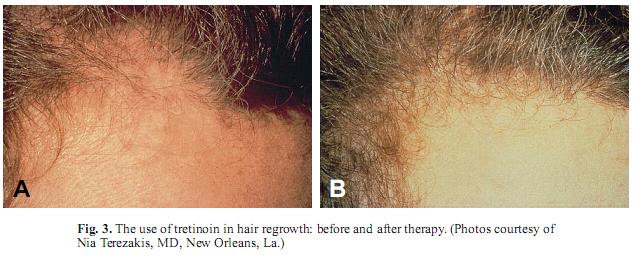
Then, in 1986, a group of scientists decided to try topical retinoids and minoxidil on humans with androgenic alopecia (link). After one year of using the combination, 66% of the participants saw regrowth of terminal hairs. None of the participants used minoxidil alone, but some of them did use only retinoids. Applying 0.025% tretinoin topically resulted in hair growth in 58% of the subjects. The picture below shows one subject before and after using tretinoin.

Tretinoin and hair growth
According to the authors, the hair growth may be due to increased cell proliferation and differentation and the generation of new blood vessels. Another paper that appeared a few years later also speculates on how retinoids might cause hair growth (link). The authors of this paper suggest that certain retinoids increase the rate of hair of hair growth, prolong the anagen phase, and help convert vellus hairs to terminal hairs.

At least in mice, levels of cellular retinoic acid binding protein are higher during the anagen phase and lower during the telogen phase of hair growth. Applying some retinoids topically increases the level of this protein in the skin, which might explain how retinoids prolong the growth phase (link). Both isotretinoin (also called 13-cis-retinoic acid) and tretinoin (also called all-trans-retinoic acid) seem to shorten the telogen phase and increase the anagen phase; however, they also differ in their effects, at least in vitro (link).

A review on retinoids and hair growth states that according to the studies, only tretinoin and isotretinoin are able to prolong the anagen phase (link). I'm not sure how true this statement is, given that other vitamin A derivatives such as etretinate have been associated with hair darkening and new hair growth (link) and even retinol boosts the effectiveness of minoxidil (link).

Not all studies have found the combination of minoxidil and retinoids to be superior to minoxidil alone (link). The hypothesis that retinol and some retinoids increase the absorption of minoxidil is plausible, but this is not the only explanation, since retinoids are effective even on their own. Thus, with or without minoxidil, retinol and retinoids seem worth a shot. Keep in mind, though, that the picture above shows the result after one year of use, and that almost half of the participants did not see an increase in hair growth.

For more information on hair growth, see these posts:

Zinc Pyrithione Reduces Shedding and Moderately Promotes Hair Growth
Hair Growth with Ayurveda – The Nutrich Oil Experiment
Do Flax Lignans Reduce Hair Loss from MPB?
Green Tea Extract Grows Hair in Vitro, Might Work in Vivo

BioSil, JarroSil & Beer – Silicon Experiment Conclusion

Beer – it's not just the alcohol that goes to your head.
Beer – it's not just the alcohol that goes to your head. (Photo by Fabrice ROSE)

This post is the long overdue conclusion to my silicon experiment. The idea was to replicate a study that found improved skin quality, nail thickness and hair growth using a bioavailable form of silicon known as choline-stabilized orthosilicic acid (ch-OSA).

For two and a half months, I mixed five drops of Natrol's BioSil product with juice. This was equal to 5 mg of ch-OSA, which is only half the dose used in the original study. In an update post, I wrote that there might have been a slight increase in the thickness of my nails. I did not see an increase in the speed of growth, however. Hair growth and skin quality were also unchanged.

I then increased the dose to 10 mg for the next two months. To make the experiment more scientific, I began cutting my nails every 14 days to see if there was any change in how quickly they grew. Again, there was no significant change in skin, nail or hair quality.

After the bottle of BioSil was finished, I continued the experiment with Jarrow's JarroSil product while keeping the amount of orthosilicic acid at 10 mg. There's not much difference in price between the two products, but one thing Jarrow definitely has over Natrol's orthosilicic acid is the taste: BioSil tastes pretty horrible, while JarroSil doesn't really taste much of anything.

I now have several months of experimentation behind me with JarroSil. After a month or so of taking 10 mg daily, I began a routine where I take the product for two weeks and then have two weeks off, all the while keeping an eye on hair and nail growth and skin quality.

Even though I had pretty high expectations from ch-OSA, given that it had the science behind it and people seemed to have good experiences with it in general, I can't say I noticed any improvements. Hair thickness has not increased, at least not visibly, and my skin looks the same regardless of whether I'm using the product or not. On some weeks I think my nails grow faster than on others, but this seems to be independent of silicon.

One reason for not seeing any positive results may be that the original study was done on middle-aged women. Perhaps the benefits of orthosilicic acid supplementation come with age. Another possible explanation is that dietary intake of orthosilicic acid also plays a role. The European Food Safety Authority has estimated that the typical dietary intake of silicon is 20-50 mg. Maybe I already get enough bioavailable silicon from my diet, and the extra 10 mg did not yield any additional benefits.

Speaking of bioavailable silicon, did you know that the best dietary source is beer? According to one study, beer contains a little less than 20 mg of silicon per liter on average, regardless of the type or geographic origin of the beer (link). The actual amount varies between 9 and 39 mg per liter.

About 80% of the silicon is in the form of orthosilicic acid, which is the bioavailable form. The absorption of silicon from beer is 55%. This means that a can of beer (330 mL) contains, on average, about 7 mg of silicon. Of this, about 5.6 mg is orthosilicic acid, about 3.5 mg of which is absorbed.

There is no data directly comparing the bioavailability of ch-OSA and orthosilicic acid from beer, but since the urinary excretion rates of the two appear to be similar, we can assume their absorption is also similar. Thus, two cans of beer would give roughly the same amount of orthosilicic acid as used in the study.

Jarrow and Natrol mention only that silicon is poorly absorbed from many food sources and that orthosilicic acid is easily polymerized, which dramatically reduces its bioavailability (the choline is added to prevent the polymerization). This is indeed true, but they neglect to mention that not all dietary sources of silicon are poor. Beer seems to be the best one, but even water and mineral water contain 2-5 mg of orthosilicic acid per liter (link).

Since beer is one of my vices, I think I get enough orthosilicic acid in my diet anyway, so I won't be investing into supplemental forms anymore. However, if your dietary intake is low and you're looking for ways to increase hair or nail thickness, supplementing with JarroSil or BioSil may be worth a shot.

Even though my conclusion to the experiment is that I did not notice any visible results, I'm not disregarding orthosilicic acid as worthless. In fact, a new study confirms some of the findings of the study on photoaged women (link):

Forty-eight women with fine hair were given 10 mg Si/day in the form of ch-OSA beadlets (n = 24) or a placebo (n = 24), orally for 9 months. Oral intake of ch-OSA had a positive effect on tensile strength including elasticity and break load and resulted in thicker hair.

It may be that some of the effects are more preventative rather than visible improvements. In the above study, for example, the increased thickness was in comparison to the placebo group, not the beginning of the experiment. Both groups saw decreases in hair strength; the supplemented group simply experienced a smaller decrease.

The next time someone argues that drinking is bad for the skin, you can counter them with the high silicon content of beer.

For more information on hair and skin, see these posts:

The Forgotten Anti-Aging Classic: Retinoids Are the Skin's Best Friend
Topical Vitamin C for Skin: Re-examining the Case
Lutein for Skin Elasticity, Hydration and Photo-Protection – Experiment Begins
Coconut Oil Is Better than Olive Oil for Atopic Dermatitis

10 Human Experiments of 2009 – Year in Review

10 Human Experiments of 2009 – Year in Review
One of this year's big themes among bloggers was vitamin D deficiency. (Photo by Gail S)

Only a few days left until the end of the year, which means it's time to take a look at the inhuman experiments of 2009. For a summary of the experiments of 2008, click here.

1. Maca root experiment

The purpose of this experiment was to see whether taking maca powder increased energy and sex drive. While those who sell the stuff claim that maca is the ancient Incan remedy for just about every problem you can imagine, the scientific evidence behind it is more modest. That said, a couple of studies have indeed shown improved libido and increased sperm count from maca, so the claims are not entirely baseless.

Personally, I didn't notice anything different on the days I took maca, even in large doses. I speculated in the experiment conclusion that perhaps maca is only effective in those whose sex drive and energy levels are low to begin with. Another possible reason suggested by one of the studies is that only red maca is effective while yellow and black maca are not. The maca powder I purchased was yellow.

2. Retinol cream experiment

The retinol cream experiment was quite unique in the sense that it's one of the very few experiments that actually gave a positive result. The goal was to see whether retinol, the animal form of vitamin A, would improve skin quality. Since retinol is less harsh on the skin than retinoids, I thought it would be useful to try a retinol cream before moving on to the stronger stuff.

While the appearance of my skin didn't change visibly during the experiment, there was an unexpected growth of new hair on my left temple. I even took a few pictures to show I wasn't making it up. I'm not sure whether the effect was simply due to increased collagen production and skin cell proliferation or something else, but if you're suffering from hair loss, I would recommend giving retinol a go. As another experiment, I'm currently applying tretinoin on my face to see if retinoids are even more effective.

3. Tocotrienol experiment

Like tocopherols, tocotrienols are a form vitamin E. Most multivitamins contain only alpha-tocopherol, but it's the tocotrienols that seem to have all the interesting health benefits. Well, at least potential health benefits. One study reported an increase in hair growth in all subjects taking the tocotrienol supplement. Such a result seemed so unbelievable that I had to try it out for myself.

One major problem with this experiment was that tocotrienol supplements are not cheap, which meant that the duration of the experiment was only two months. As I wrote in the conclusion, I didn't see a visible increase in hair growth, but there appeared to be a reduction in the number of hairs lost daily. If I get my hands on an affordable tocotrienol supplement, I look forward to repeating the experiment to see if the reduction was due to tocotrienols or something else.

4. Topical vitamin C, vitamin E & ferulic acid experiment

In this experiment, I applied a topical consisting of ascorbid acid, vitamin E and ferulic acid on my face. All three compounds have some evidence behind them showing that they increase collagen production and improve skin quality. The product I was testing was called SkinCeuticals CE Ferulic acid, which is really expensive if you buy it the usual way; I purchased several smaller sampler bottles online, which was cheaper. Another way to save cash is to make a similar product yourself.

In the experiment conclusion I reported that I didn't see any improvement in my skin quality. A possible reason is that some of the liquid in the sampler bottles was apparently oxidised, which would render it useless. I concluded that it was not worth the price to keep using the product. However, some months later I read a book on skin aging that made me reconsider the whole thing, and so I decided to re-visit the experiment and order another set of sampler bottles. The experiment is still going on, and so far, none of the samplers have contained oxidised liquid.

5. Vitamin D3 experiment

As I'm sure you've noticed, vitamin D3 was really big in the health blogosphere this year. After reviewing the data I concluded that I've very likely been deficient in vitamin D3 for most of my life and decided to start supplementation. I know standing naked in the sun to get the required dosage is a big thing in the paleo circles, but at these latitudes it's not very feasible. Besides, sun damage seems to be a major cuplrit in skin aging.

For a few months, I took 2,000 IU per day and then increased to 5,000 IU. This got my serum 25-hydroxyvitamin D levels up to 113 nmol/L (45 ng/mL), which is in the optimal range. I'm still taking 5,000 IU daily, and while it hasn't given me complete immunity against all infections, this is the first experiment that has resulted in a reduction of colds. Not even intermittent fasting or the paleo diet did that.

6. Hyaluronic acid experiment

In a sort of continuation to my experiment with MSM, chondroitin and glucosamine, I decided to try oral supplementation with hyaluronic acid. Despite the high price, hyaluronic acid seems to be quite popular and is said to improve skin quality and promote hair growth. The evidence for oral supplements is shaky, however, except maybe for joint problems.

Because hyaluronic acid is so damn expensive, the experiment lasted for only a month, which is probably the shortest duration of any experiment on this blog. I didn't see any difference in skin quality or hair growth, but feel free the take the results with a grain of salt. I think hyaluronic acid may actually be quite useful, but next time I'd rather try applying it topically.

7. Tea tree oil vs. Korean red ginseng experiment

Now here was an experiment that seemed to go on forever. In this "classic" hair growth battle, Korean red ginseng and tea tree oil fought it out on my legs. Since Korean red ginseng (also known as Panax ginseng) has been shown to promote hair growth, and tea tree oil is supposed to be anti-androgenic, I was expecting ginseng to increase and tea tree oil to suppress hair growth on my legs.

After meticulous experimentation with various carrier oils and different parts of the body, I got sick of the whole thing and called it quits without ever seeing any results. You can read the "exciting" conclusion if you're interested in the details. All in all, I would think twice before adding these two to a hair loss regimen.

8. Intermittent fasting experiment

A couple of months ago I wrote on the blog that a year had passed since I began my intermittent fasting experiment. While I've occasionally experimented with different variations of the same thing, I have mostly followed the 24/24 hour cycle of feasting and fasting. That is, for most of the year I stopped eating at about 6 PM and then started eating again the next day at 6 PM.

After the last post describing my year on the diet, I've slowly returned towards a more "normal" way of eating again. Compared to other people, I still have lengthy periods of not eating, but I'm no longer on the strict 24-hour cycle. The main reason for the change is that intermittent fasting does not appear to increase lifespan like caloric restriction does, and life extension is my main interest, after all. For losing weight and improving insulin sensitivity it still appears to be beneficial, provided you do it the right way.

Beyond weight loss, however, I'm thinking there are better ways to incorporate fasting into my health regimen than the 24-hour cycle. Perhaps longer fasts done less frequently, perhaps periodical protein restriction. I'll write more about the subject once I do some more reading. Anyway, I feel pretty good about being able to follow my intermittent fasting routine so strictly for an entire year. Life extension or not, it surely taught me to think of hunger in a new, more positive way. The looks and comments I got from family members, friends, and strangers alike were pretty entertaining, too.

9. Emu oil vs. Hair Again experiment

This experiment was another battle between two hair growth products. This time the competitors were emu oil and a topical gel called Hair Again. Emu oil comes up every year in hair loss forums, but the fact is that the evidence behind it is very limited, to say the least. The commercial product, on the other hand, contained many ingredients that looked quite useful.

After eight months, I concluded that the battle had no clear winner, since there was no change on either side of my face. Yes, the hairs I grew with the retinol were still there, but no further improvement was seen. I still have some of the emu oil left, but I haven't found much use for it ever since I ran out of the topical gel. Sadly, even if I wanted to continue the experiment I couldn't, because the company that makes the gel refuses to ship to Finland any longer.

10. Nootropic experiment

The purpose of this three-way battle between taurine, acetyl-L-carnitine and ginkgo biloba was to see if any of them were effective as nootropics, either taken alone or in combinations. My subjective evaluation of my energy levels, mood, and ability concentrate would serve as the indicators. As an objective measurement, I compared my scores in a memory game meant to improve IQ.

For all the money I spent on these supplements, it's a bit of a disappointment that none of them seemed to do anything for me. As I wrote in the experiment conclusion, one possible reason why ginkgo didn't work is that the plant extracts may differ significantly among brands. Acetyl-L-carnitine and taurine, on the other hand, should be pretty much the same stuff regardless of the manufacturer. In the future, I may try another brand of ginkgo, and I'm thinking of using taurine to prevent glycation and hangovers. Further experiments may follow.

Conclusion

So there you have, the ten inhuman experiments of 2009. Once again, not many positive results, but hey, at least we've learned something, right? As you can see in the top-right corner of the blog under "Current Experiments", many of the experiments that started this year will continue into 2010, so stick around and see how they end.

Finally, I'd like to thank all the readers for your encouraging comments and questions during the past year – and for pointing out the mistakes, of course! You've been very helpful in making this blog better, and I hope the improvement continues the next year. Until then, happy holidays and take care!

The Forgotten Anti-Aging Classic: Retinoids Are the Skin's Best Friend

The Forgotten Anti-Aging Classic: Retinoids Are the Skin's Best Friend
Before you whip out $150 for a Goji berry skin cream, how about giving retinoids a go? (Photo by km !)

When it comes to skin care, retinoids appear to be a true star. A star among useless junk floating around the space we call cosmetics.

What other compound has decades of research behind it and been shown to actually reduce wrinkles? I can't think of any. What I can think of is new products that promise the world and cost a fortune constantly being advertised in health magazines, in the hopes that middle-aged women with deep wallets and an insatiable thirst for looking younger would fall for their marketing claims.

And they do. These anti-aging, youth-restoring, skin-plumpening, illness-curing magical creams and gels in their tiny little jars sell like there's no tomorrow. The price tag is unimportant, as long as the wrinkles will be gone.

But of course, a hundred bucks later, the wrinkles will still be there, ready to absorb the next product with its new moleculer structure that will revolutionize the cosmetic industry. I shake my head in amusement and disbelief at this sight of desperate women grabbing stacks of hard-earned or divorce-obtained cash from their Louis Vuitton purses and throwing them at salespersons, demanding to be lulled into a false dream of a wrinkle-free tomorrow.

Okay, so maybe I'm exaggerating here (I've never seen them actually throw cash), but you get the point. Why is not everyone using retinoids if they wipe the table with everything else? Maybe they aren't that good after all. Maybe it's yet another marketing trick. Maybe they were lying about retinoids too!

To find out the truth, it's time to take the red pill and do a quick review of some of the studies on retinoids, before I once again plunge myself into the wonderful but scary world of skin care in the form of an experiment. Yes, I will be trying the stuff on myself.

What are retinoids?

Retinoids are derivatives of vitamin A – that is, they are chemical compounds related to vitamin A. We absorb retinoids from foods, mainly animal sources, in the form of retinyl esters, which are then hydrolized to yield free retinol. Retinol, along with retinal, tretinoin, isotretinoin and alitretinoin, form a class known as first-generation retinoids. Etretinate and acitretin form the second generation, while tazarotene, bexarotene and adapalene form the third.

Topical retinoids were originally approved by the FDA for treating acne, but it was quickly realized that retinoids improved the skin in other ways too. Currently, three prescription-strength retinoids are available and sold under various brands: tretinoin (Atralin, Avita, Retin-A, Retin-A Micro, Renova), tazarotene (Avage, Tazorac), and adapalene (Differin). Retinol creams are generally available without a prescription, but they are also less potent.

How do retinoids work?

One mechanism behind some of the beneficial effects of retinoid is an increase in the thickness of the skin. Even though retinoids actually thin the stratum corneum – the strong, flexible and dry outermost surface of the skin – they thicken the epidermis and the dermis underneath it (link). The end result is a thicker, more youthful looking skin.

Retinoids are also powerful exfoliators. They help peel off dead skin cells on the surface of the skin and increase the turnover of keratinocytes (link). Keratinocytes, the major cells in the epidermis, move from the basal layer to the epidermis, where they differentiate and then die. The cells are thus constantly exfoliated naturally as new keratinocytes form at the basal layer. Retinoids speeds this process up and gets rid of old cells to give room to younger, healthier cells.

Furthermore, retinoids increase the production of hyaluronic acid (link, link) and collagen (link). Together they give the skin a more hydrated and firmer appearance. Retinoids also stimulate dermal fibroblasts, which are cells that make the structural framework of animal tissues (link), and replaces disorganized collagen fibers with new, well-organized fibers (link). Angiogenesis, the formation of new blood vessels, improves blood flow to the skin and is the reason behind the healthy, rosy glow reported by tretinoin users (link).

What can retinoids do for my skin?

Okay, enough technical talk; how does all this translate into real life? While retinoids are succesfully used to treat conditions such as acne vulgaris and to improve wound healing, they also have several skin health benefits in normal persons with signs of skin aging. Here's a list of positive effects seen in retinoid users, as reported in the literature (e.g. link, link, link, link, link):

  • Increased skin thickness and firmness
  • Increased skin hydration
  • Increased skin tolerance to external factors
  • Reduced visible signs of sun damage
  • Reduced fine wrinkles
  • Restoration of even skin tone and reduced hyperpigmentation
  • Reduction in dark circles under the eyes
  • Reduced skin roughness
  • Reduced irritation from shaving
  • Less risk of skin cancer
  • Reduced stretch marks
  • A healthy, 'rosy glow'

In one self-assessment, 83% of the participants rated their skin as improved after 6 months of using 0.05% tretinoin. With continued use, fine lines and coarse wrinkles keep improving, and as mentioned before, the epidermis and dermis thicken significantly. The effects are not only cosmetic in nature, as is the case with products like moisturizers, but rather reflect the fact that underlying damage is being actively repaired.

How to use retinoids

Prescription retinoids come in varying strengths: 0.025%, 0.05% and 0.1%. Since retinoids can cause skin irritation, they may take some getting used to, especially with stronger creams and gels. Common symptoms are exfoliation, stinging, burning, redness and itching, but they generally start to subside within 2 to 6 weeks. Even the strongest concentration seems to be tolerated quite well after a while (link). No abnormalities in the skin have been reported even after years of continued use, making tretinoin safe for long-term use (link).

Many people start with 0.05% strength, and if they find it too irritating, switch to 0.025%. If your skin is very sensitive, consider starting with the 0.025% and gradually moving to higher concentrations. Or, alternatively, start by using the product only every other day or even twice a week and then switch to daily use once your skin is accustomed to it.

Many of the studies have used 0.05% tretinoin with good results, but stronger creams may be even more effective (link). Retinol causes little to no irritation but produces weaker results (link). One study suggests isotretinoin, which is commonly used orally but is also available as a topical gel, may be more effective than tretinoin (link). Retinoid gels in general appear to be stronger than creams, so a 0.05% gel may be more irritant (but also more effective) than a 0.05% cream.

It is recommended that retinoids are applied in the evening or at night rather than in the morning. Some people say the reason is because they increase susceptibility to photodamage, but I haven't found evidence to support this claim. Rather, a good reason not to apply it in the morning is that retinoids themselves are degraded by sun light. Before applying, it's also recommended to wait 15-20 minutes after washing your face, presumably to reduce absorption and thus irritation.

My retinoid experiment

To see if all the pro-retinoid hype is really true, I'm going to try retinoids on myself. But, instead of just applying it on my face and trying to remember what I looked like before I started using retinoids, I'm only going to apply the product on the left side of my face.

Or, to be precise, I have two products I'm going to be testing: tretinoin cream (0.05%) and tretinoin gel (0.05%). Both are generic versions from alldaychemist.com, which sells them without prescriptions (hooray for individual choice!). I'm starting off with the cream to see how well my skin can handle retinoids in the first place.

For more information on skin care, see these posts:

Topical Vitamin C for Skin: Re-examining the Case
Silica for Hair, Nails & Skin: BioSil vs. JarroSil
How I Accidentally Grew Hair on My Left Temple with Retinol – Experiment Conclusion
Coconut Oil Is Better than Olive Oil for Atopic Dermatitis

Emu Oil vs. Hair Again® Topical Gel: Hair Growth Battle Conclusion

Emu Oil vs. Hair Again® Topical Gel: Hair Growth Battle Conclusion
We put a man on the moon, so why can't we grow hair? (Photo by Zach_MancesterUK)

This post marks the conclusion of the hair growth battle between emu oil and Hair Again®. The idea was to see whether either product would promote hair growth as advertised.

For the past eight months, I've been applying Hair Again® topical gel on my left temple and emu oil on my right temple. Given that the rather small can of gel has lasted me this long, it's obvious there have been occasions when I've forgotten or just decided not to use it. In particular, I've skipped applying the gel and the oil when I've washed my hair, because they tend to make my hair look greasy.

Nonetheless, I believe this is a long enough time to see results. And, since I've only applied the gel to a small area, it's not too surprising it has lasted so long. I should note that at first, I only used it on my temple, but about halfway through the experiment, I started applying it on my left eyebrow as well. In addition, I've used it on the small gap in my hairline which seems to run in the family. I occasionally but rather inconsistently applied the emu oil to my right eyebrow.

So what about the results? Well, the first observation is that nothing positive has happened on the right temple. I know emu oil is touted as some kind of ancient remedy of the Aboriginees, claimed to improve wound healing, skin wrinkling and hair growth, but I saw no such effects. It's supposed to permeate the scalp skin easily, but I found it to leave a very greasy feeling for a long time, especially if I used it on my face. Granted, the skin on the temples and on the scalp may be different, and perhaps it really does feel good on the scalp, but used in the way I used it, I can't say I liked the product.

In fact, on more than one occassion, I noticed an itching feeling and small red bumps from irritation on my right temple after applying the emu oil. That didn't happen when I put it on my face, where it just left a greasy residue. There was no change in skin smoothness and no increase in eyebrow growth.

With Hair Again®, things were a little more interesting. As you may know, I managed to grow a couple of new hairs on my left temple using a retinol cream from the same company. Those hairs are still there, and while I'm not sure whether I'd classify them as vellus or terminal hairs, they have grown to over 2 cm in length. Since the gel I used for this experiment also contains retinol, I was expecting results at least as good as with the ordinary retinol cream.

The full ingredient list is pretty impressive: coenzyme Q10, superoxide dismutase, retinol, vitamins E & D3, glutathione, beta glucan, beta carotene, beta-sitosterol, quercetin, progesterone, and melatonin. Most of these have studies behind them showing that they have the ability to grow hair in vitro, and getting all of them in one product is not a bad deal at all. But as everyone who has been tried hair growth products on themselves knows, in vitro studies rarely translate into hair growth in vivo.

And such was the case here as well. Unlike emu oil, the gel is absorbed quite nicely, and despite its yellowish color, doesn't leave your skin yellow. However, after months of use, it's still uncertain whether the product actually does anything. If I look really closely, I think I can see some vellus hair growing on the temple that weren't previously there, but the effect has definitely been more modest than with the retinol cream. Furthermore, my eyebrows have not thickened, and nothing has happened with the small gap in the hairline.

It could, of course, be that these ingredients only work on the scalp where hair is already growing. Maybe there is a crucial difference between the temples and the hairline and say, the crown. Certainly, many people report that they have more success with hair loss treatments in filling in crowns than temples and receding hairlines.

However, since it clearly is possible to grow new hairs on the temples – an area affected by androgen receptors just like the rest of the scalp – using retinol, one of two explanations come to mind: either the amount of retinol is too small, or the rest of the ingredients cancel the effect. To my knowledge, all the ingredients in the gel work by reducing androgen receptors or DHT (again, in vitro) and not by promoting hair growth per se, like minoxidil does. The fact that I saw no thickening of the eyebrows supports this view.

Therefore, my suspicion is that no matter where you apply the product, it will have a weak cosmetic effect at best. You might grow some vellus hairs, which could be useful, but I doubt it will reverse your hair loss. And if you just want to grow some vellus hairs, you might want to go with pure retinol instead. Or retinoids, if you're willing to risk some skin irritation in the beginning.

Anyway, I'm glad that the experiment is finally over, and I can move on to new and more exciting experiments. I already have a couple of good ones planned. I'll keep you posted.

For more information on hair growth, see these posts:

Eclipta Alba Extract Grows Hair Quicker than Minoxidil
Tea Tree Oil vs. Korean Red Ginseng – Hair Growth Battle Conclusion
Silica for Hair, Nails & Skin: BioSil vs. JarroSil
2% Nizoral Shampoo Increases Hair Growth More than 2% Minoxidil

Silica for Hair, Nails & Skin: BioSil vs. JarroSil


Silica has been shown to increase nail thickness. (Photo by James Jordan)

It's time for another update on my experiment with orthosilicic acid, the bioavailable form of silica.

For the past four and a half months I've been taking BioSil, a supplement that contains silica in a more absorbarble form known as choline-stabilized orthosilicic acid (ch-OSA). In one study, this form of silica improved skin, hair and nail quality in women after 20 weeks, so I decided to see whether it would affect my nail and hair growth too.

During the first two and a half months, I took 5 mg of BioSil daily to see whether a lower dose would be effective. I concluded that it might have increased nail thickness slightly, but that the rate of growth was unchanged. I also saw no increase in hair growth speed or thickness.

As the study on women used 10 mg instead of 5 mg daily, I doubled my dose after the 10 week mark. For the past two months, I've been on the 10 mg dose. The total time of my experiment is therefore very close to the duration of the study on women. The difference is that until about halfway through, I was taking half a dose.

To evaluate the effectiveness of BioSil, I've been cutting my nails every 14 days and trying to measure the speed of my nail growth. I've also looked at variation in the thickness of roots and tips of shed hairs. Based on my subjective evaluation, there's been no significant change. My nails are thicker than they were some years ago, but I suspect the change is due to a healthier lifestyle in general rather than supplementing with silica. During these past months, I've seen no further improvement.

I also took a two-week break from BioSil to see if my nail growth speed would come to a decline. Again, based on subjective evaluation, there's been no change. Nevertheless, I'm continuing the experiment at least until I've taken 10 mg of orthosilicic acid daily for 20 weeks. That way comparisons between my own experiment and the published study are more comparable.

However, from this point on, I'm switching from BioSil to JarroSil. Both are silica supplements that contain orthosilicic acid in a stabilized form, but the method of stabilization is different: JarroSil uses PEG and a boron compound, while BioSil uses choline.

If you've used BioSil before, then you might be aware that Jarrow used to sell BioSil. Currently, the Belgian supplier of BioSil has sold the rights to Natrol, so Jarrow decided to make their own form of stabilized orthosilicic acid and give it a different name.

What about price? Well, one 1 oz (30 ml) bottle of Natrol's BioSil costs $23.99 at iHerb and contains 120 servings of 5 mg orthosilicic acid. A 2 oz (60 ml) bottle of Jarrow's JarroSil costs $17.99 and contains 120 servings of 4 mg of orthosilicic acid. So a month of daily 10 mg doses will cost you $12 with BioSil and $11.25 with JarroSil. Not much of a difference.

Jarrow claims that their product is 2.5 more bioavailable than other formulations, but as of yet, there are no studies showing that this is true. Also, quite a few of the studies have used the (ch-OSA found in BioSil, while other formulations have been studied less. At this point, we just don't know which one is better. Maybe this experiment will shed more light on the issue.

For more information on hair, skin and nails, see these posts:

Topical Vitamin C for Skin: Re-examining the Case
Lutein for Skin Elasticity, Hydration and Photo-Protection – Experiment Begins
Do Flax Lignans Reduce Hair Loss from MPB?
Coconut Oil Is Better than Olive Oil for Atopic Dermatitis

Protein, Vitamins and Wound Healing

A vitamin deficiency will impair the healing of wounds.
A vitamin deficiency will impair the healing of wounds. (Photo by marie b.)

I wrote a while ago that my wound healing has slowed down for some reason. It's nothing too dramatic, but small cuts and scratches don't seem to heal as fast as they used to.

In the previous post, I mentioned low zinc levels as a possible cause and decided to take 15 mg of zinc daily in addition to the 9 mg I get from my diet and multivitamin. Since I didn't see much of a difference with or without extra zinc, and because I'm not convinced that supplementing with zinc is necessarily a good idea, I stopped after a few weeks.

While I haven't injured myself lately to see if there's been a change, I've been doing some reading to know more about what effects wound healing. Recently, I found an old paper from 1955 titled Nutrition and Wound Healing (link). I know science moves on and everything, but since there's that certain something about old studies that I like, I decided to write a blog post about the paper.

It's probably no surprise that nutrition does have an effect on wound healing in humans and animals. The authors write:

It was shown in 1922 by Ebeling that a 10 per cent rise in the temperature of a cold-blooded animal would double the rate of wound healing. This indicates that wound healing is a chemical reaction. Thus, if the local factors discussed previously are kept at an optimum, the most important variable is the supply of the components for the chemical reaction. To accomplish this in the human being nutrition must be adequate.

By local factors, they mean things like bacteria, the amount of dead tissue and the vascularity of tissue to be repaired, which are not dependent on nutrition.

Wound healing and protein

So what is important when it comes to nutrition? Obviously, protein must play a role in the generation of new tissue. It seems like a reasonable assumption that a diet low in protein slows down wound healing. Conversely, a diet high in protein might be expected to speed up the wound healing process.

The authors mention a study from 1919 showing that animals on a high-protein diet had shorter healing times of surface wounds than animals on a high-fat, low-protein diet. Another study from 1935 showed that hypoproteinemia, a condition in which there's an abnormally low level of protein in the blood, resulted in poorly healing wounds in dogs. The reason was delayed formation of fibrous tissue and the accumulation of fluid beneath the skin. When proteins were reintroduced, the wounds healed normally. The same applies to humans:

Levenson and associates have presented numerous cases of healing burns in humans with a marked delay in healing being manifested in the hypoproteinemic patient.

It should be noted that protein intake by itself doesn't help much if some of the requisite amino acids are not present and protein synthesis cannot occur. Hence, there's a difference between consuming 100 grams of protein from eggs and consuming 100 grams of protein from beans.

There's no indication, however, that increasing protein intake above normal levels would further speed up wound healing. Since I eat either meat or fish daily as part of my semi-paleolithic diet, I don't think low protein levels are the issue in my case.

Wound healing and vitamins

What about vitamins? We know that vitamin D and vitamin A play a role in bone growth, so perhaps they are involved in the healing of wounds as well. According to the authors, the case is not clear cut:

In general, it appears that large doses of either vitamins A or D inhibit the healing of soft wounds in experimental animals. There is conflict as to whether small dosages are helpful. Bush and Lam feel that vitamin A will hasten the healing in vitamin A-deficient animals.

The same pattern rises again: fixing a deficiency will improve things, but increasing intake further won't do much good (and may even be harmful). The B-complex group of vitamin seems to fit into this category too, with rats deficient in pyridoxine (vitamin B6) and riboflavin (vitamin B2) showing impaired wound healing. Vitamin B12 has also been suggested to increase the strength of wounds in rats during the early healing period.

While vitamin C is necessary for building collagen and capillaries in healing wounds, it's not entirely clear how much vitamin C is optimal. Low levels of vitamin C are common among patients with wound disruption, and long-term depletion of vitamin C can halve the tensile strength of healing wounds. Yet, it takes more than a month of ascorbic acid depletion to see an effect. As the authors state, the data on vitamin C and wound healing is somewhat contradictory:

A similar interpretation might be made from the work of Carney, who observed no difference in the healing of war wounds of soldiers in the Italian campaign on vitamin C-deficient diets and low serum levels, compared to those on adequate diets and high serum levels. On the other hand, most surgeons have the feeling that wound healing is impaired proportionately to the degree of ascorbic acid deficiency.

There are no clinical reports on wound healing and disruption in patients alternately treated with large vitamin doses presently in vogue, compared to control to whom no additional vitamins were administered.

There are a couple of newer studies showing that ascorbid acid may improve wound healing when administered via injection, but studies on dietary vitamin C and wound healing are more scarce. One study on guinea pigs did suggest that increases in dietary ascorbic acid improved wound integrity (link).

Wound healing and other factors

An interesting point the authors mention is that the pH of wounds may play a role in wound healing. In lower organisms, the pH varies markedly from the regressive phase to the regenerative phase. Furthermore, animals on an acid diet were shown to have shortened wound healing times.

In my previous post, I wrote that intermittent fasting may be one reason for slower wound healing:

There is a paper (here) that says caloric restriction and intermittent fasting reduces cell proliferation in epidermal tissue, which would likely have an effect on wound healing as well.

In contrast, the authors quote studies on salamanders and rats showing that fasting accelerates wound healing, as long as they're not starved. Despite how fasting is defined here, it does seem to fly in the face of the study that says both CR and IF reduce cell proliferation in mice. Perhaps the severity of the wound is also important here.

Conclusion

A deficiency in protein or vitamins results in impaired wound healing, but increasing dietary protein or vitamin intake above normal levels does not necessary speed up wound healing. There are conflicting results as to whether fasting increases or decreases the speed of wound healing.

For more information on nutrition, protein and vitamins, see these posts:

Slowing Down Aging with Intermittent Protein Restriction
A High-Protein Diet Is Better than a High-Carbohydrate Diet for Weight Loss
Dietary Vitamin K2 May Reduce Prostate Cancer
Fish Oil Decreases Inflammatory and Atherogenic Gene Expression

Want to Help Practical Anti-Aging Research? Here's Your Chance

In the future, we won't need Photoshop.
In the future, we won't need Photoshop. (Photo by Tucia)

If you support the anti-aging movement but are unsure how to help in practice, here's a good chance to do just that without even leaving your computer.

The Immortality Institute has announced a matching grant for anti-aging research. The Institute will match every contribution for the study of laser ablation of lipofuscin up to $8,000. For every dollar you donate, they will donate one too, with the goal of reaching a total of $16,000 in donations.

And what exactly is lipofuscin and why is it important? Here's a quote from the Laser Research Grant website:

Lipofuscin is a byproduct of metabolism - a type of indigestible junk that slowly builds up within (and outside) human cells throughout life. It is most commonly recognized as the "stuff" that gives age spots their color.

As I've discussed on this blog before, the accumulation of waste seems to be a key factor in age-related disease and, ultimately, death from old age. Any technological innovations that target this problem should be warmly welcomed by anyone who is not looking forward to spending their retirement years in poor health.

The technology proposed here is using laser pulses to destroy lipofuscin, also known as Selective Photothermolysis. The use of lasers, LEDs, and infrared light is nothing new in cosmetics, but in this case, the goal is more about reversing damage rather than just covering it up. The research will be conducted by Nason Schooler at the SENS Foundation Research Center in Tempe Arizona. Here's a quote about the study itself:

The current proposed research will use various pulsed laser treatments to investigate the effects on worm lifespan. Human cell culture models will also be used to investigate the dynamics of lipofuscin destruction microscopically in actual human cells.

For more details on how the study will be done, see this video presentation by Mr. Schooler. If you want to further discuss the research – or anything related to increasing lifespans – I highly recommend paying a visit to the imminst.org discussion forums (you can find me there as well, under the name JLL).

The matching grant is open until 17th August, so if you want to donate and get an extra bang for your buck, you have about two weeks (you can donate here). Currently, we're a few hundred short of $3,000, which does not include the matching sum from the Immortality Institute.

If you don't have hundreds of dollars to spend, that's okay – every bit helps. Also, the research will be conducted even if the goal is not reached (just on a lower budget), so donations will definitely not go to waste.

UPDATE: We gathered a whopping $10,077.80 in donations, which will be matched by $8,000 from the Immortality Institute and
by $9,038.9 from private investor Peter Thiel for a grand total of $27,116.70. This means that the goal was more than reached, and the research will take place as intended. Big thanks to everyone who donated!

For more information on anti-aging, see these posts:

How to Live Forever: My 5 Steps to Immortality
Who Wants to Live Forever? Results from a Global Survey
Anti-Aging in the Media: New York Times on Caloric Restriction and Resveratrol
Biotechnology and the Future of Aging

Blood Test Analysis: My Experience with Vitamin D3 Supplements

Blood Test Analysis: My Experience with Vitamin D3 Supplements
For those who stay out of the sun, vitamin D3 supplements are a must. (Photo by respres)

In my last post, I analyzed my cholesterol levels and revisited the debate surrounding saturated fat. The main reason I went to have a blood test, however, was to see how my vitamin D levels were.

I have learned about the importance of vitamin D only quite recently. After some reading, I decided to start taking vitamin D3 supplements. For the first couple of months, I took 2,000 IU (equal to 40 mcg) daily, which is fairly conservative and often the minimum dose recommended by people who've done their homework. Conventional wisdom on the other hand still sees 400 IU of vitamin D2 as sufficient, even though it produces serum levels that are way too low for optimal health.

About one month before the blood test I increased my intake to 5,000 IU per day. Since I still had plenty of 2,000 IU capsules left, I took 2 capsules every other day and 3 every other day, thus averaging 5,000 IU. Since the serum half-life of vitamin D is quite long, this shouldn't make any difference.

After supplementing with 2,000 IU vitamin D3 for a few months and then increasing to 5,000 IU for a month, my serum 25-hydroxyvitamin D levels were 113 nmol/L, or about 45 ng/mL. This is considered to be within the optimal range, which is 32-100 ng/mL (link).

Considering that
  1. Most people have suboptimal serum levels of 25-hydroxyvitamin D
  2. Most foods provide only small amounts of vitamin D
  3. I live in the north and avoid the sun,
I think it's safe to say that the fact my serum levels are within the optimal range is mainly due to supplementation. I'm also fairly certain that prior to starting taking supplements, my levels have been even lower than average – that is, I've been deficient in vitamin D for most of my life.

Whether or not you enjoy the sun, I encourage you to get your vitamin D levels checked. And if you have already done that, feel free to post your results in the comments. I'm currently collecting data from other people to do a post on how people's serum levels have varied with and without vitamin D3 supplements.

For more information on vitamins, sun and health, see these posts:

Topical Vitamin C for Skin: Re-examining the Case
How to Get Natural Sun Protection by Eating the Right Foods
Sesame Seeds Increase Absorption of Vitamin E Tocotrienols by Up to 500%
Lutein for Skin Elasticity, Hydration and Photo-Protection – Experiment Begins

BioSil for Skin, Hair & Nails – Experiment Update


Beer contains 10-40 mg of silicon per litre. (Photo by Bernt Rostad)

For the past two and a half months, I've been taking 5 drops of BioSil. The active ingredient in BioSil is choline-stabilized orthosilicic acid, a bioavailable form of silicon. The reason behind the experiment is that BioSil was shown in one study to improve skin, hair and nail quality after 20 weeks.

While the women in the study used 10 mg, Natrol recommends to take 5 mg (equal to 5 drops) for hair, skin and nails, so I've stuck with the lower dosage so far. As for hair thickness, I haven't seen any visible difference yet. A microscopic analysis might show different results, but to the naked eye, there's been no change in the thickness of individual hairs.

It's difficult to compare results in skin quality, since I have so many other experiments going on at the same time (see my topical vitamin C experiment and lutein experiment for examples). The only change that I've noticed is perhaps a slight decrease in nail brittleness. I can't be certain, but my fingernails may be a bit thicker than they were. The rate of growth is unchanged, however.

Since I'm impatient and anxious to see results, I'm going to double my dosage and go for 10 mg per day. The taste is pretty vulgar even with 5 drops, but anything for the sake of science, right? I'll report back when I've finished the bottle, which should take about a month or so.

Oh, and if you've used BioSil and have noticed a difference, feel free to drop a comment and let me know how many drops you used.

For more information on skin, hair and nails, see these posts:

Examining Possible Causes for Slower Wound Healing
Coconut Oil Is Better than Olive Oil for Atopic Dermatitis
Hyaluronic Acid for Skin & Hair – Experiment Conclusion
Emu Oil and Hair Growth: A Critical Look at the Evidence